

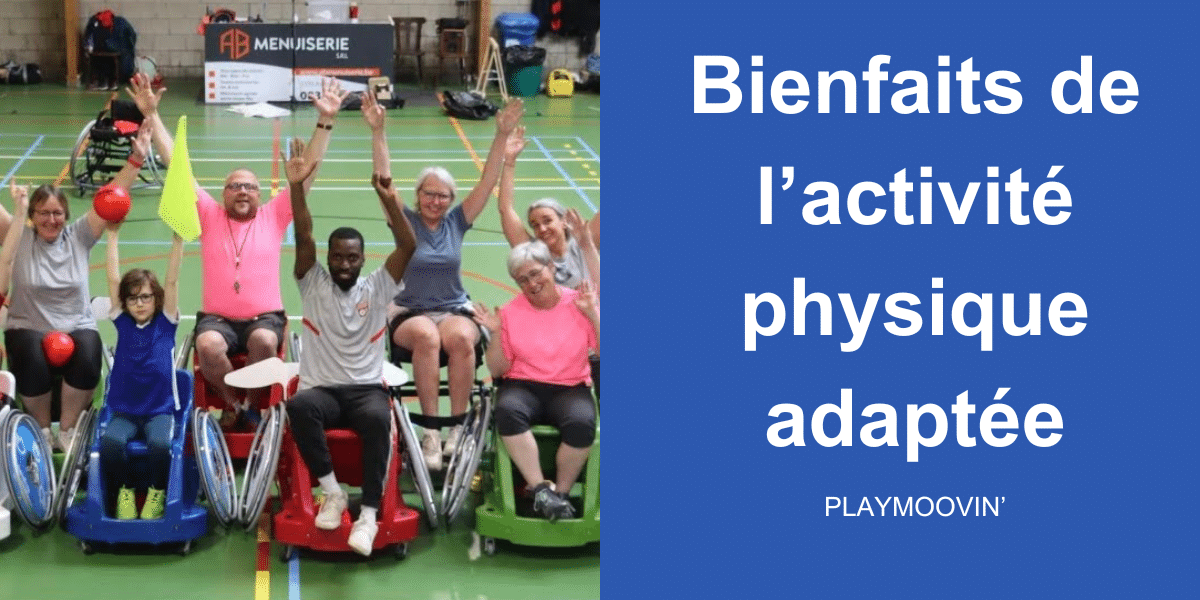
Have you ever heard about adaptive physical activity (APA)? Discover a world in which exercise is a powerful tool which induces feelings of well-being and balance, even in the case of health problems. Find out here about adaptive physical activity and its benefits.
What is adaptive physical activity?
Adaptive physical activity in a few words
As the name suggests, adaptive physical activity (APA) is a collection of sport activities which are adapted to the capabilities and needs of people suffering from a disorder. It can be:
- a disability;
- a chronic disease;
- a physical limitation;
- a problem due to age;
- etc.
Adaptive physical activity is also very beneficial for people presenting risk factors such as:
- obesity;
- prior cardiovascular problems;
- a sedentary lifestyle;
- etc.
Adaptive physical activity sessions are organised within varied structures such as:
- sport and health houses,
- rehabilitation centres;
- associations;
- hospitals;
- etc.
Sport federations also offer adaptive sessions tutored by sport teachers.
APA: a precious health asset
Physical activity is used here as a form of non-medicinal treatment to improve the health and the living conditions of the patient.
On that note, there exists precise APA programs that are adapted to the patient’s health and physical capabilities.
For example, a person suffering from a long-term condition can have physical activity as medical advice within their approved healthcare pathway. But it is also possible to practice a physical activity on your own.
The different types of adaptive physical activity
There are a lot of APAs. For example, we can talk about:
- aquafit;
- yoga;
- adaptive cycling;
- wheelchair basketball;
- etc.
In any case, you will see that the benefits of adaptive physical activity are important on numerous aspects.
APA: a trump card to recover physical capabilities
The improvement of a person’s general condition is the first benefit of adaptive physical activity. APA develops muscle strength as much as stamina. By doing so, it contributes to the improvement of the cardiorespiratory capabilities of different kinds of people.
For instance, muscle strengthening exercises help the elderly to keep their autonomy. It helps them to stay mobile and prevents falls.
APA can even mitigate the outbreak of symptoms as is the case for people suffering from COPD. Patients who regularly practice adaptive exercises can reduce their breathlessness.
For people suffering from obesity or from metabolic disorders, adaptive physical activity practice contributes to a better weight management.
Some studies also showed that the regular practice of an adaptive sport reduces the risk of death by 30% for people suffering from:
- type 2 diabetes;
- high blood pressure;
- cardiovascular diseases.
The effectiveness of these adaptive physical activity sessions is acknowledged by the medical community.
But it is not the APA’s only benefit.
APA: the key to the recovery of mental wellbeing
The practice of an adapted physical activity also has considerable benefits for mental health.
Adaptive physical activity and mental health
Generally, physical exercise induces the release of endorphins, better known as the happy hormones.
For information, these hormones have several benefits. Firstly, they improve the mood and reduce the levels of stress and anxiety for example.
They also improve sleep quality. In this context, APA is an interesting alternative for people suffering from nervous depression. Studies have shown that it could also even be as effective as antidepressants in the case of some types of minor depressions.
Moreover, APA allows to improve self-confidence and self-esteem. The people suffering from chronic diseases find a feeling of control over their body and over their life again.
A cognitive capabilities booster
Sport works greatly for stimulating blood flow. Moreover, it favours the creation of new neurons. In that regard, it contributes to improve focus and memory for the elderly or for people suffering from Alzheimer.
On a global scale, sport activity helps keeping the brain active. Thus, adaptive physical activity contributes to a better mental health.
Reconnecting with others: a priceless benefit of adaptive physical activity
APA has one last essential benefit. It allows people who are often isolated because of their condition to socialise.
They often practice sport in groups. Sport teachers create a situation which is ideal for interactions and which helps to get rid of social isolation. It is a precious occasion for everyone to keep human connections.
The participants share similar experiences. Thus, they feel like they are part of a group and it improves their self-esteem.
Each benefit of adaptive physical activity offers a lasting solution to manage physical, social or mental difficulties. PlayMoovin’ works along with APA professionals by providing them light wheelchairs that are easy to handle for the practice of an APA.
If you need more information about our wheelchairs, you can call us anytime!
Sources
HAS-Consultation et prescription médicale d’activité physique à des fins de santé
HAS-L’activité physique adaptée votre meilleure alliée.


