

How are parasport and adaptive sport defined?
Parasport and adaptive sport were created to fulfil the specific needs of people suffering from disabilities. However, they were not made for the same types of disabilities. Moreover, they each approach sport practice in a unique way. Let’s see that in more details.
A focus on parasport
Parasport is intended for people suffering from a motor or a sensory disability. It provides activities adapted to sport practice using specific equipment such as a manual sport wheelchair, a prothesis or a guide for example.
In France, it is the parasport French federation (FFH) that manages these types of activities. It organises and develops physical activity practice in the country for people suffering from:
- A motor disability
- A disability affecting the vision
- A hearing disability
On that note, French parasport will have a great opportunity to shine because the 2024 paralympic games will take place in Paris from the 28th of August to the 8th of September.
And what about adaptive sport?
Adaptive sport has been managed by the adaptive sport French federation (FFSA) since 1977. It is intended for any person suffering from a mental and/or psychological disability. It is intended for people that are for example suffering from:
- Psychological troubles;
- Autistic troubles;
- A genetic alteration such as Down syndrome;
- An intellectual defect
In these cases, adaptive sport mostly aims to promote the sportsperson’s autonomy, well-being, and social inclusion through sport.
The rules are of course adapted to the athletes’ capabilities and needs.
What are the key differences between parasport and adaptive sport?
Although adaptive sport and parasport both aim to promote physical activity and social inclusion for people suffering from a disability, their priorities differ depending on the athletes’ needs. One of these being the nature of the disability as explained above.
Each federation develops specific programs to adapt to the unique needs of who they want to help. For instance, parasport can require specialised equipment while adaptive sport is mostly about adapting the rules and providing good supervision.
Adaptive sport and parasport: an example with rugby
You will find below two adaptations of rugby for people suffering from disabilities. The first adaptation is part of adaptive sport and the second one is part of parasport.
Adaptive rugby, an inclusive sport
Adaptive rugby is similar to the traditional version of rugby but it differs from it by making some changes. The rules are here less strict, most notably in regards to forward passes or offsides. These rules aim maintaining the flow of the game fluid and make the actions more dynamic.
In adaptive rugby, the push distance in a scrum is generally limited to 1.50m to prevent injuries.
Other rules can be adapted depending on the physical and cognitive capabilities of the players. A team can be composed of 3 to 15 players.
Some adaptations can be made for the pitch depending on everyone’s capabilities.
Wheelchair rugby, the fusion between performance and inclusion
Wheelchair rugby is part of the sport disciplines that are accessible both for a leisurely and for a competitive practice. It is intended for athletes suffering from:
- Tetraplegia;
- Cerebral palsy;
- A neuromuscular disease;
- Etc.
Wheelchair rugby is a demanding sport which combines speed, strategy, and dexterity. Athletes have a sport wheelchair and, on that note, PlayMoovin’ is the recurring partner of numerous wheelchair rugby clubs. For example, we have been collaborating with the Stade Toulousain for more than 4 years.
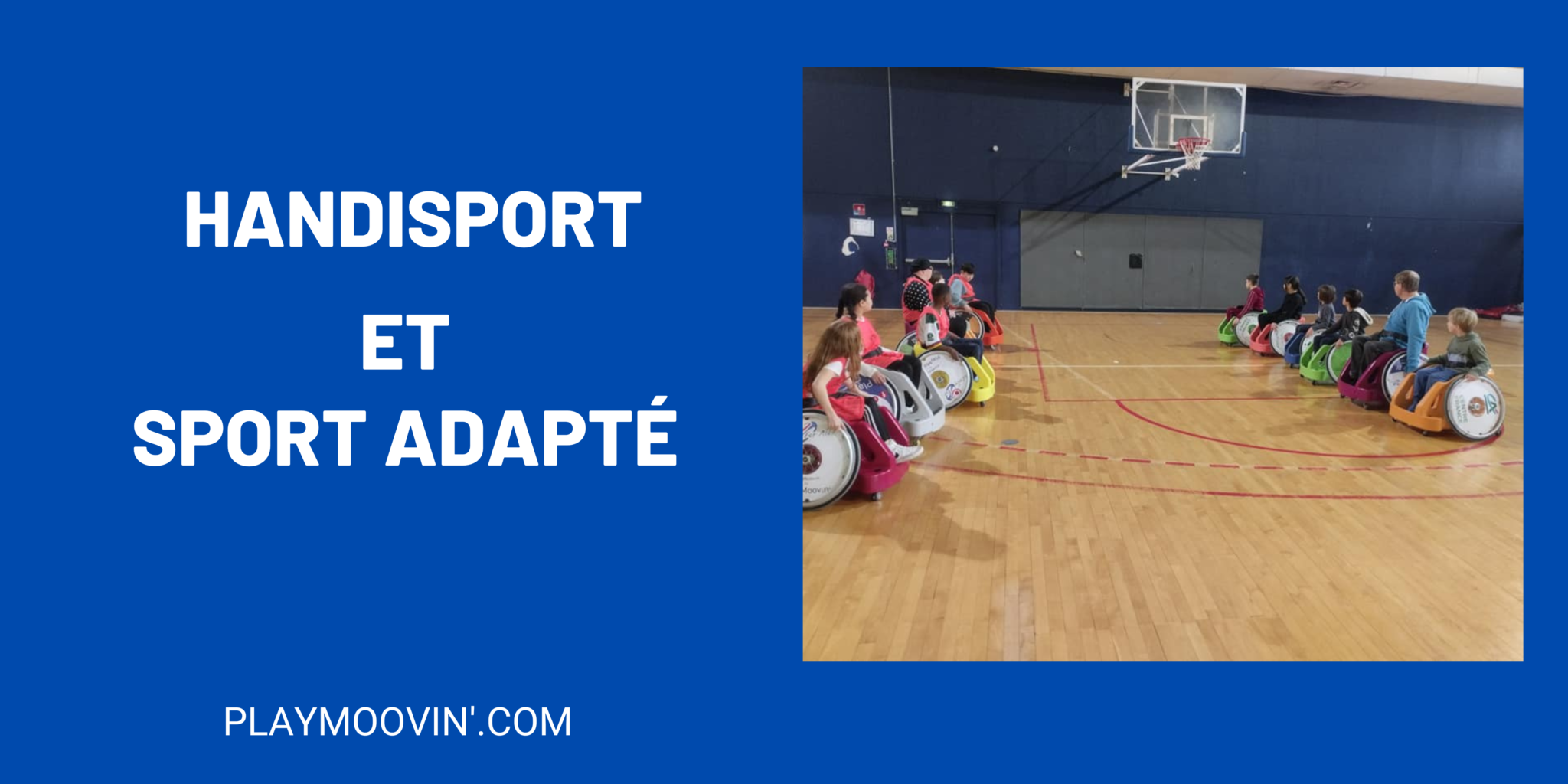
Our sport wheelchair – the FreeMoovin’ – allows a person suffering from a disability to practice a parasport in a leisurely way. It also contributes to the realisation of activities to raise awareness of disabilities among all types of audiences. Because it is made of plastic, it is light while remaining as safe to use as more professional wheelchairs used by champions.
If you want to know more about this sport, do not hesitate to read our articles about quad rugby.
Now you know of the differences between parasport and adaptive sport.
PlayMoovin’ created a sport wheelchair which allows people with reduced mobility to push their limits and to practice regularly.
On that note, we support all the initiatives which aim to make sport accessible to everyone. You need to gather equipment for your sport club? You want to organise an activity to raise awareness of disabilities? You can call us at 06 86 56 99 35 or contact us via our website so we can build a more inclusive society together.


